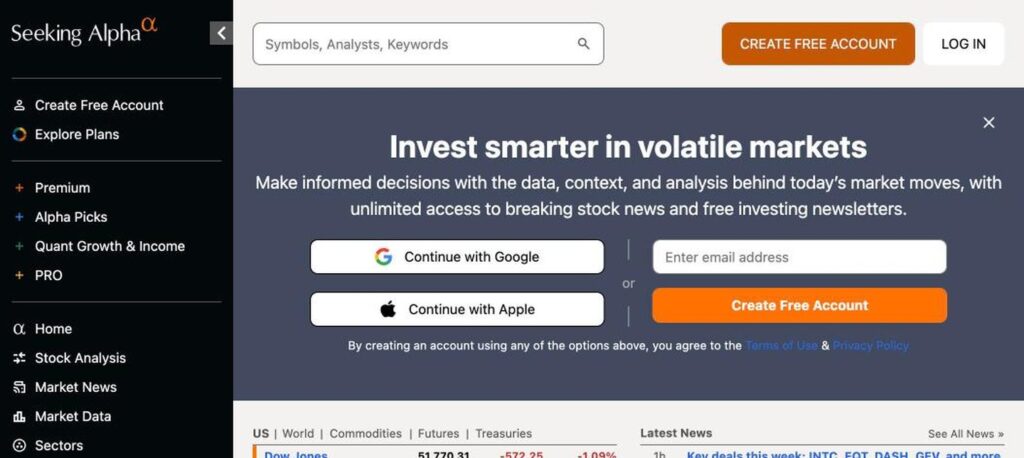
Seeking Alpha is one of the most popular stock research platforms. It combines crowd-sourced analyst articles, data-driven Quant Ratings and Factor Grades, breaking news, earnings call transcripts and portfolio tracking, with AI tools that summarize research. Basic access is free, and Premium costs $299 a year (about $24.92 a month).

What is Seeking Alpha?
Seeking Alpha has been a go-to site for investors for 20 years. Thousands of contributors publish research and opinions on individual stocks, ETFs and dividends, and millions of investors use it to follow markets and read analysis before making decisions.
Its Premium plan adds a quantitative rating system that grades stocks on valuation, growth, profitability, momentum and earnings revisions, along with Wall Street and author ratings, stock screeners, and in-depth data. AI-powered features help summarize articles, earnings calls and news so you can understand a stock faster.
Seeking Alpha key features
Quant Ratings
Data-driven Buy, Hold and Sell ratings for thousands of stocks.
Factor Grades
Grades for valuation, growth, profitability, momentum and revisions.
Analyst research
Thousands of articles from independent contributors.
AI summaries
Quick summaries of articles, news and earnings calls.
Breaking news
Real-time market and company news.
Earnings call transcripts
Read transcripts and key takeaways.
Stock screeners
Find stocks with top ratings and custom filters.
Portfolio tracking
Track holdings and get alerts and health checks.
Dividend tools
Dividend grades, scorecards and history.
Seeking Alpha pricing plans (2026)
Seeking Alpha has free Basic access and paid plans billed yearly. New subscribers often get an introductory offer.
Basic
Limited articles, news, market data and portfolio tracking with a free account.
Premium
$299 a year. Quant Ratings, Factor Grades, unlimited articles, screeners and author ratings.
PRO
$2,400 a year. Everything in Premium plus top ideas, exclusive research and advanced tools.
Introductory offers (such as $4.95 for the first month of Premium) may apply to new subscribers. Separate services like Alpha Picks cost extra. Check the latest prices on the official Seeking Alpha plans page. This is not investment advice.
How to use Seeking Alpha
- 1
Go to seekingalpha.com and create a free account.
- 2
Add your portfolio or watchlist.
- 3
Open a stock page to read news, ratings and analysis.
- 4
Upgrade to Premium to see Quant Ratings and Factor Grades.
- 5
Use screeners and alerts to find and track ideas.
Who should use Seeking Alpha?
Individual investors
Research stocks before buying.
Dividend investors
Check dividend safety and growth.
Active traders
Follow news and earnings closely.
Long-term investors
Track portfolio health over time.
Pros and cons
What we like
- Huge library of investor research
- Quant Ratings simplify stock analysis
- Strong news and earnings coverage
- Free account to get started
Watch out for
- Best features need Premium
- PRO is expensive
- Article quality varies by author
- Not personalized financial advice
Best Seeking Alpha alternatives
Seeking Alpha is one of the best research platforms for self-directed investors. The mix of crowd-sourced analysis, Quant Ratings and fast news makes it easy to form a view on a stock. Premium offers good value for regular investors; always do your own research.
Seeking Alpha FAQs
Is Seeking Alpha free?
Yes. Basic access is free, but many articles and Quant Ratings require Premium.
How much does Seeking Alpha cost?
Premium costs $299 a year and PRO costs $2,400 a year. Introductory offers may apply.
What are Seeking Alpha Quant Ratings?
They are data-driven ratings that grade stocks on factors like valuation, growth, profitability, momentum and revisions.
Does Seeking Alpha use AI?
Yes. It offers AI-powered summaries of articles, news and earnings calls alongside its quant system.
Is Seeking Alpha worth it?
Many investors find Premium worth it for Quant Ratings and research, but it depends on how actively you invest.
Is Seeking Alpha financial advice?
No. Seeking Alpha provides research and opinions, not personalized financial advice.